Vernix caseosa: the baby’s first bath can wait!
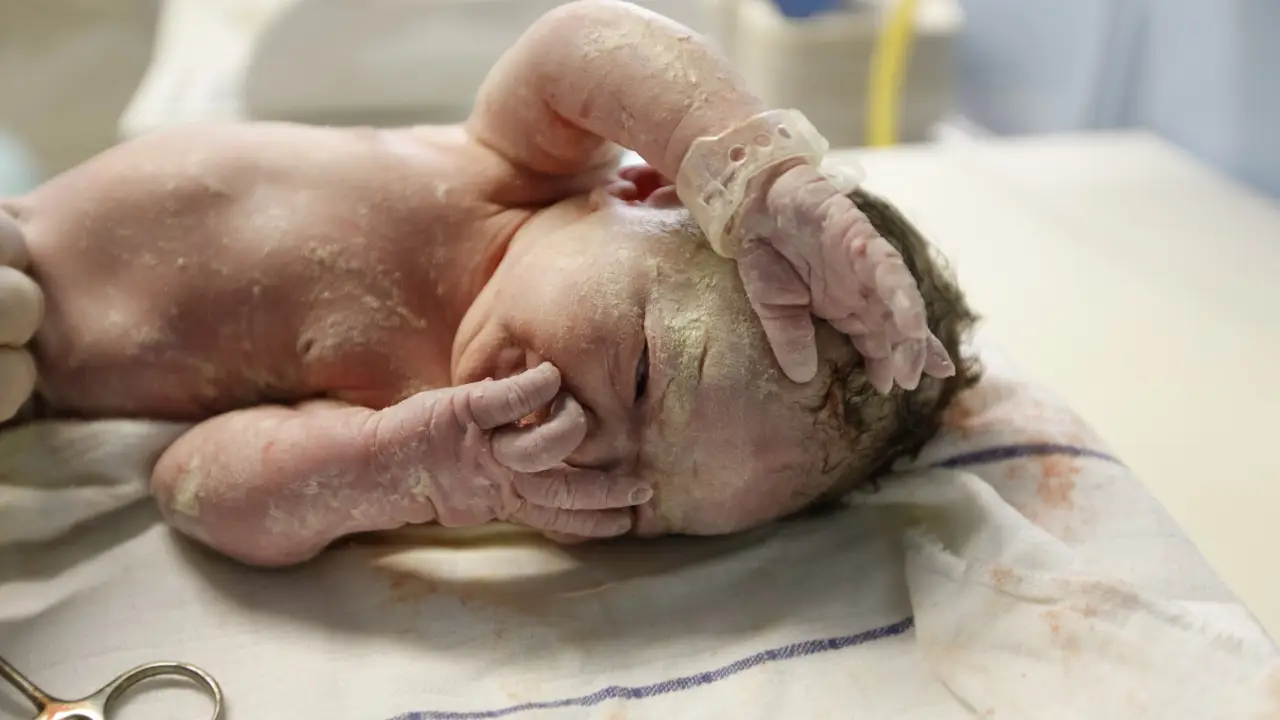
Many people look at that first photo of the newborn still in the maternity ward, covered in sebum, looking like a little cheese, with a certain disgust. And there’s always that person who says: yuck!
The importance of vernix:
What most people don’t know is that this whitish substance is nothing more than vernix caseosa. It is a coating that protects the baby’s skin inside the uterus against bacterial infections, which can be transmitted through the amniotic fluid. Vernix is produced by the baby’s sebaceous glands in the third trimester of pregnancy and is composed of 80% water, 10% lipids, and 10% proteins.
Not all babies are born with a large amount of this vernix caseosa coating, such as premature newborns. The amount of vernix can also vary from baby to baby. Full-term babies may be born with more, while those born after 40 weeks may have less. In other situations, the amniotic fluid itself causes the vernix to dilute inside the uterus. This protective layer will be important when the baby passes through the mother’s vaginal canal during labor. In addition, it is worth remembering that the baby’s temperature was constant and controlled during its intrauterine stay, and the vernix will help stabilize the newborn’s temperature after delivery.
The first bath:
After birth, it is very common in some maternity wards and hospitals to see nurses giving baths to babies shortly after birth, with an audience of family and friends watching and photographing the scene. However, the World Health Organization (WHO) recommends that the newborn’s first bath be given 24 hours after birth. After all, scientific studies prove that it is necessary to wait for the baby’s skin to absorb the vernix caseosa, as this substance protects their skin, reducing the risk of dermatitis, skin infections, and allergies to which they are exposed.
Therefore, it is necessary to wait the first 24 hours for the newborn’s first bath, and by respecting this time frame, we are not only respecting the transition process of the baby who lived inside the womb and is now adapting to the world.

0 Comments